

The heating and cooling of water experiment is a classic demonstration of the principles of thermodynamics and phase transitions. In this experiment, water is heated gradually until it reaches its boiling point, where it undergoes a phase change from liquid to gas (vapor). Conversely, the water is then cooled, causing it to condense back into its liquid form.
During the heating phase, as heat is applied to the water, its temperature steadily rises until it reaches 100 degrees Celsius (or 212 degrees Fahrenheit at sea level), at which point it starts to boil. This is the temperature at which water transitions from a liquid to a gas, releasing steam. The heating process continues until all the liquid water has been converted into vapor.
During the cooling phase, as the heat source is removed or reduced, the temperature of the water decreases. As the temperature drops below 100 degrees Celsius, the vapor begins to condense back into liquid form. This phase change releases latent heat energy, which was absorbed during the boiling process. The cooling continues until the water reaches room temperature or lower, depending on the experimental setup.
Overall, this experiment provides a hands-on demonstration of how the application and removal of heat can cause water to undergo phase transitions between liquid and gas states, illustrating key principles of thermodynamics and the behavior of substances under different temperature conditions.
See on Scoop.it – PHYSICAL SCIENCES BREAK 1.0
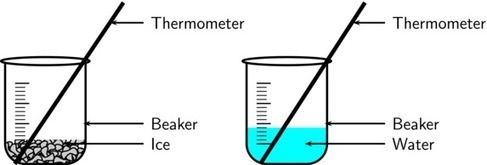
Aim
To investigate the heating and cooling curve of water.
Apparatus
beakers
ice
Bunsen burner
thermometer
water


 Physical Sciences Break 1.0
Leave a reply to Xihundlah Cancel reply