
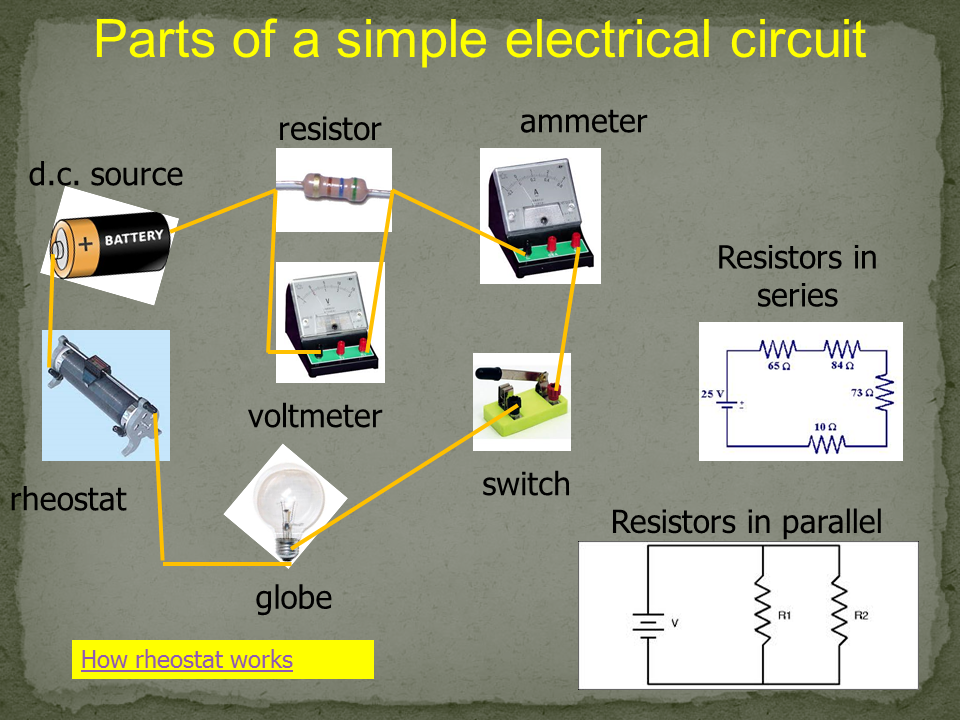
Parts of a Simple Circuit
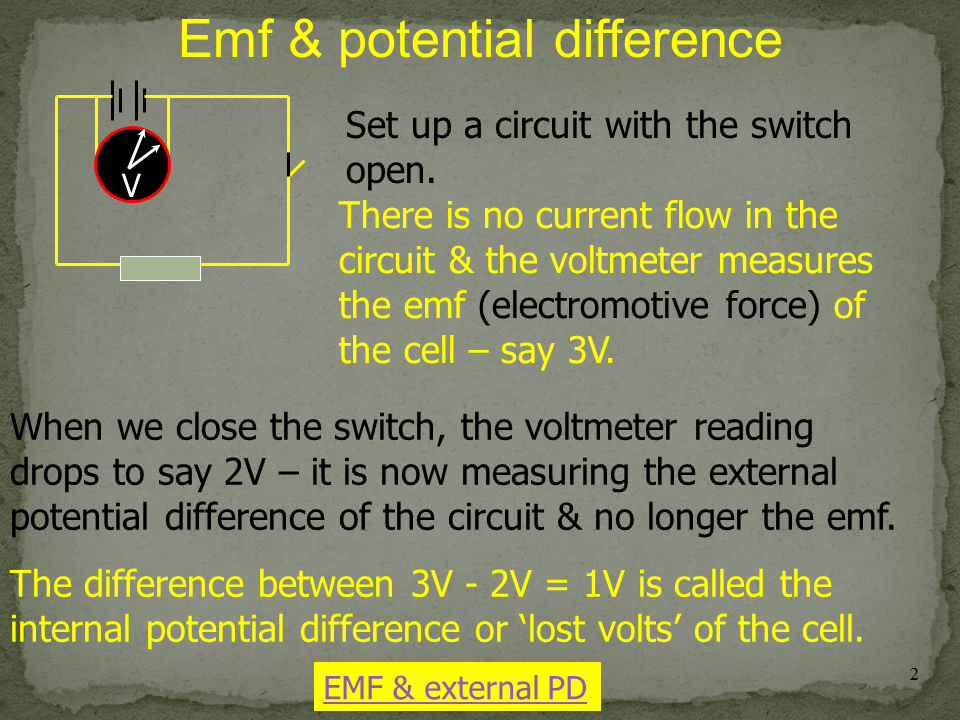
- EMF and Potential Difference:
- Electromotive Force (EMF): The energy provided by a battery or cell per coulomb of charge passing through it. It’s the maximum potential difference when no current is flowing.
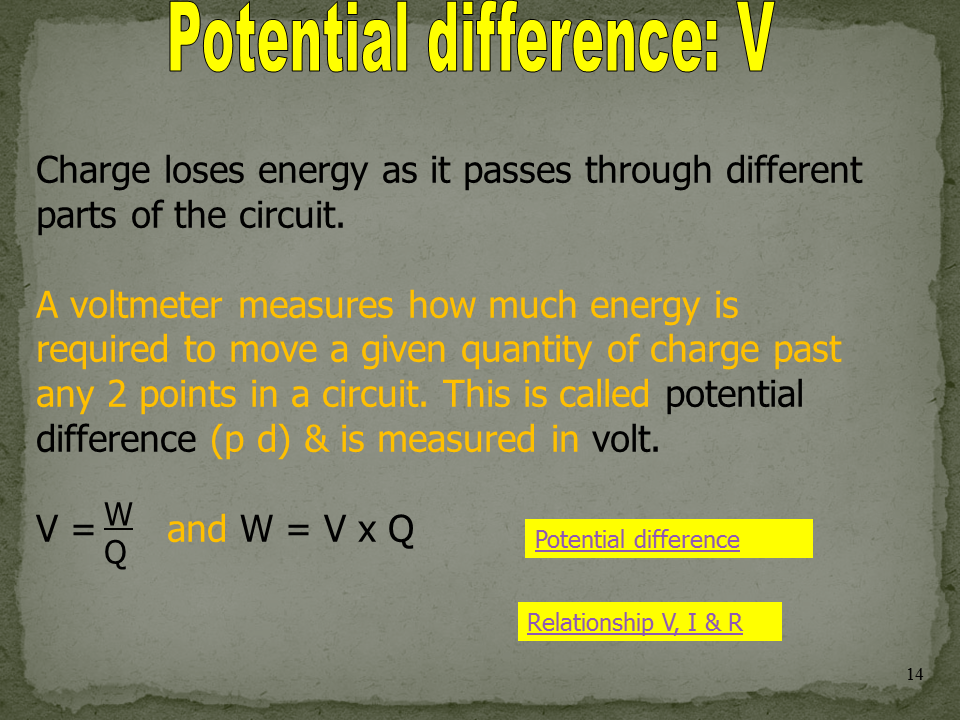
- Potential Difference (Voltage): The work done to move a unit charge from one point to another.
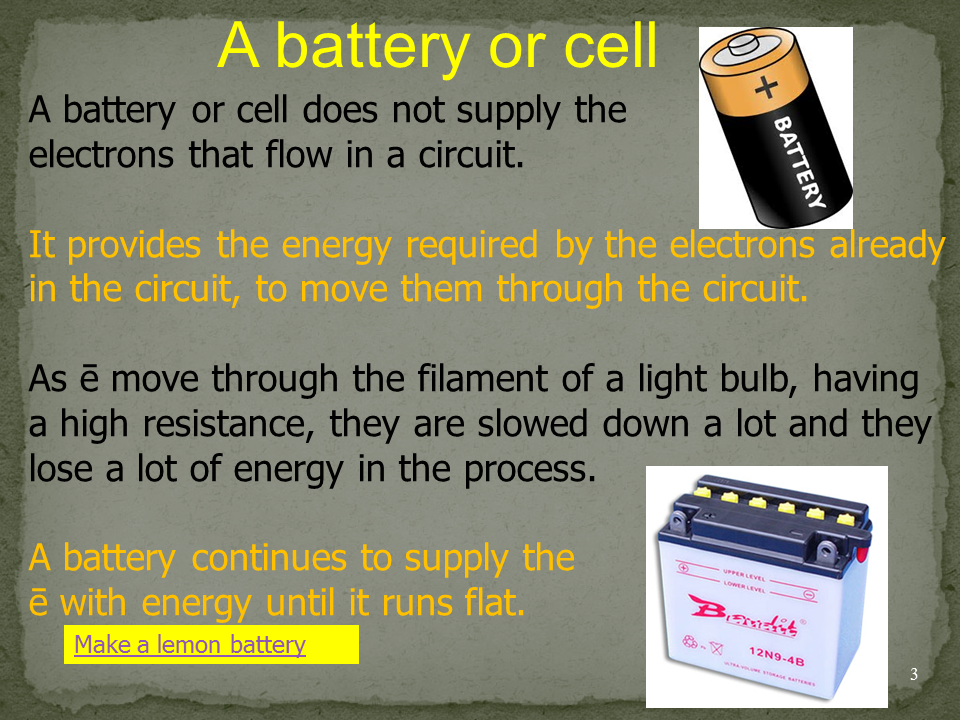
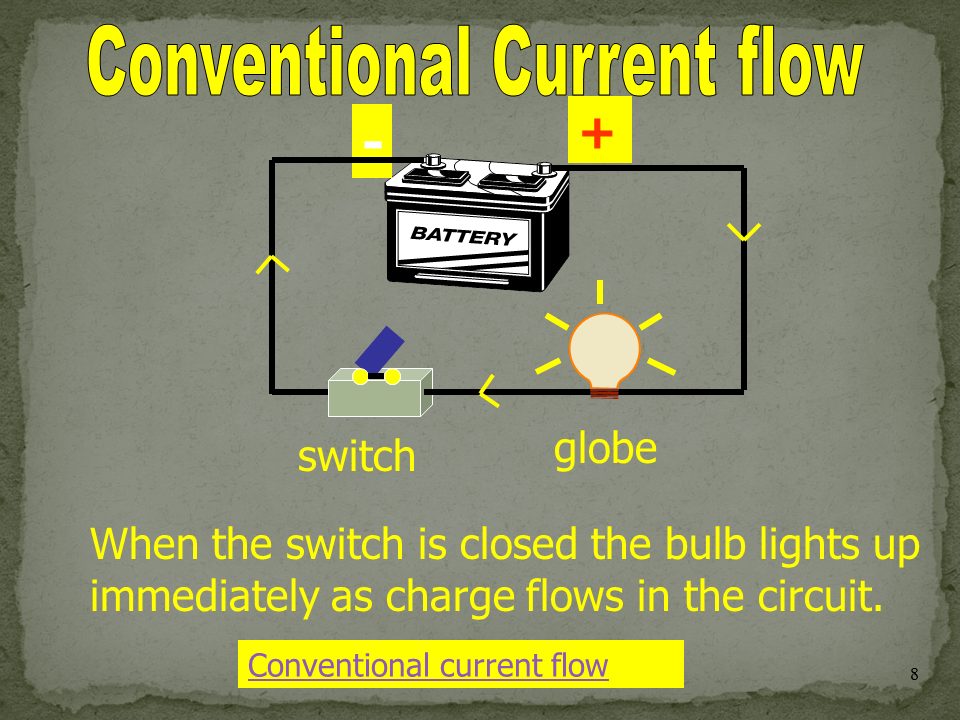
- Battery or Cell: Provides the necessary EMF to drive the current around the circuit.
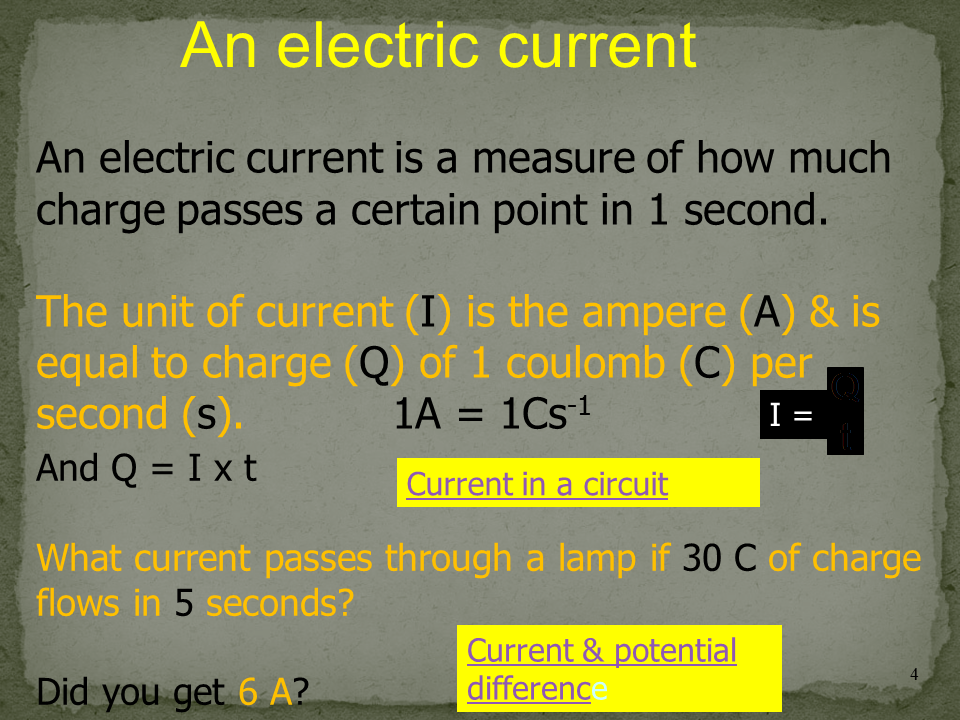
- Electric Current:
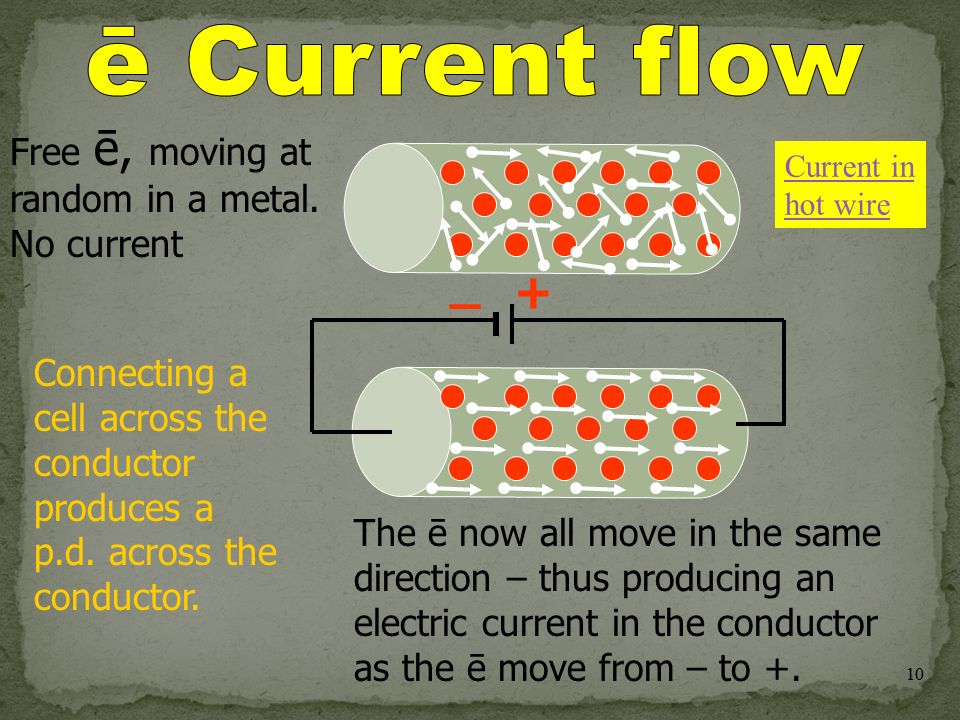
- The flow of electric charge (usually electrons) around a circuit.
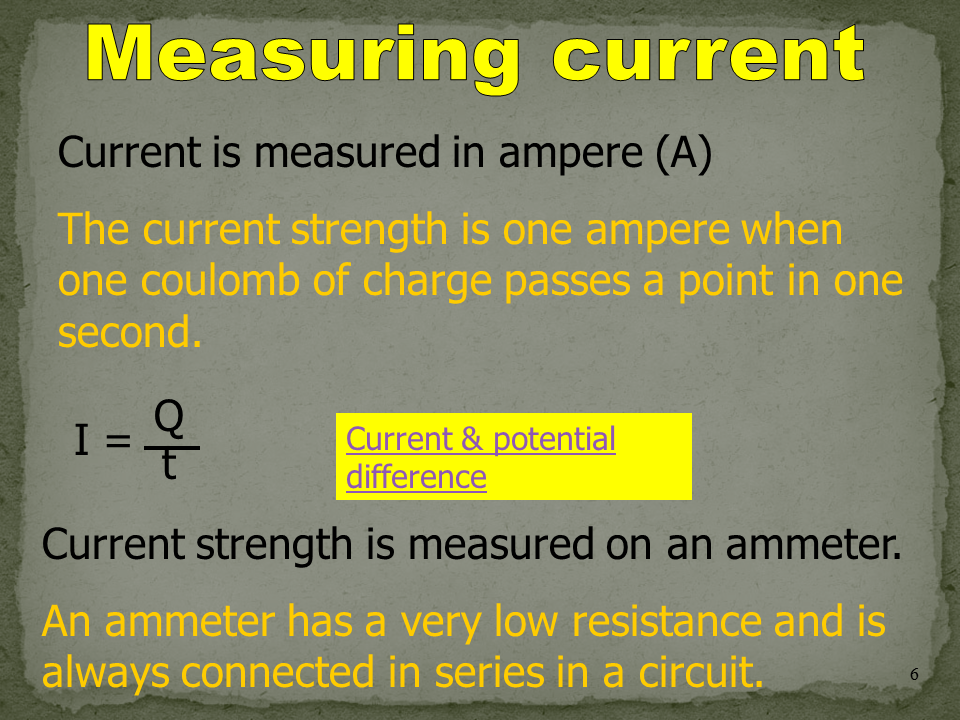
- Measured in amperes (A).
- Measuring Current:
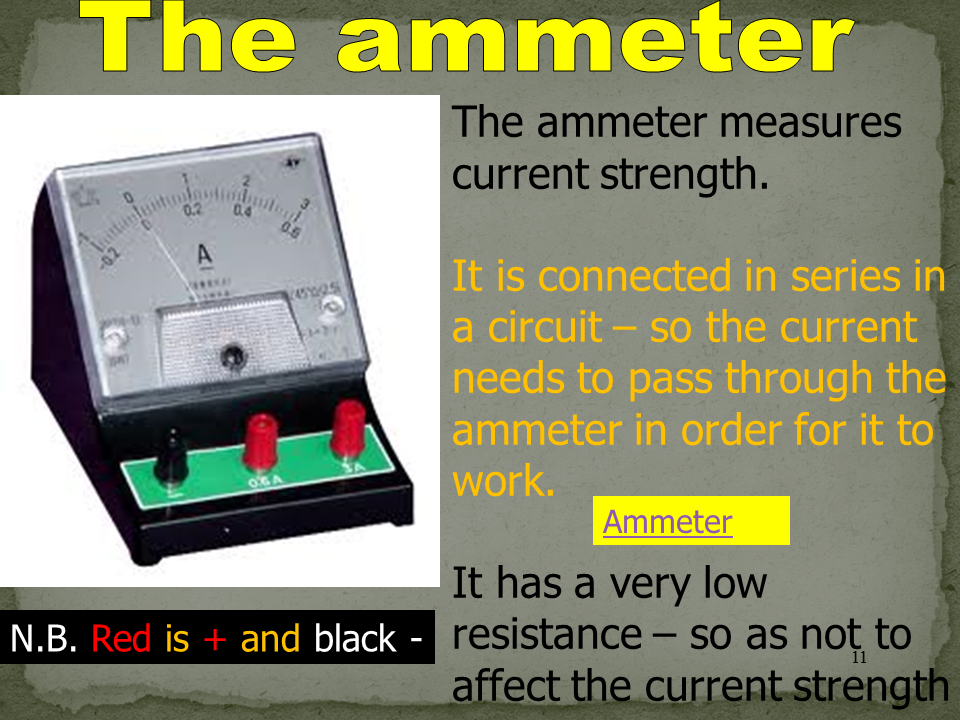
- Ammeter: An instrument used to measure electric current.
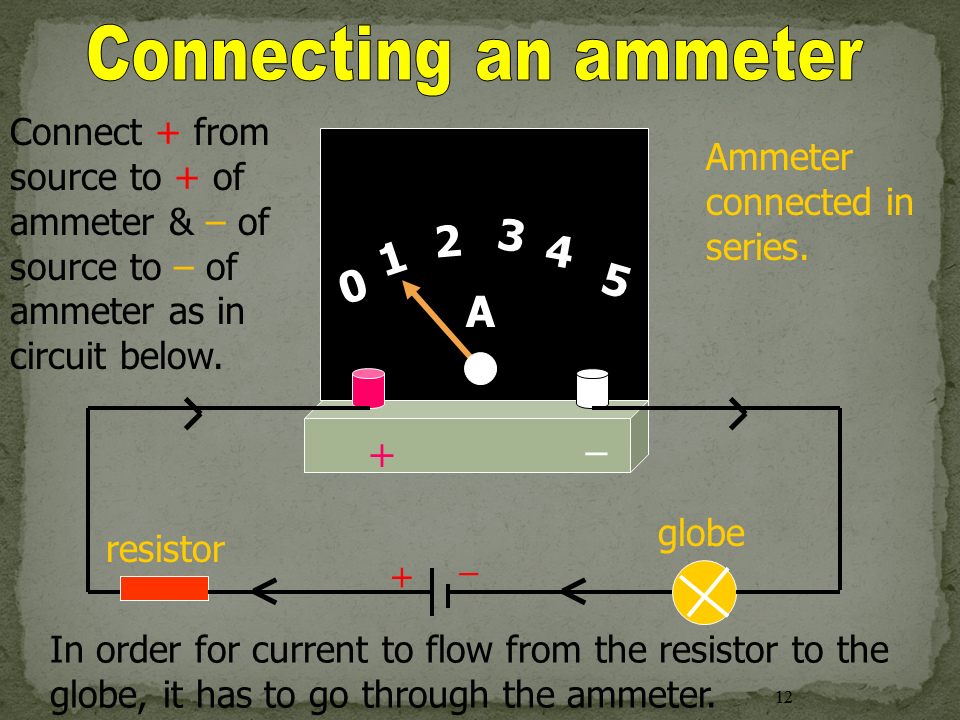
- Connecting an Ammeter: Must be connected in series with the component whose current you want to measure.
- Conventional Current vs. Electron Current Flow:
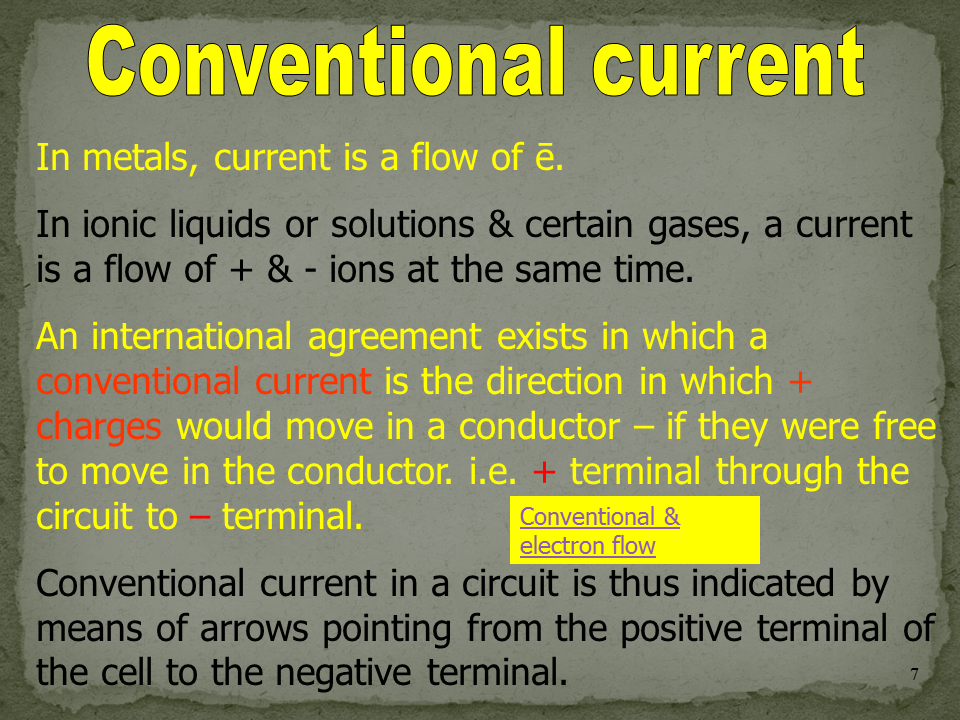
- Conventional Current: Defined as flowing from the positive terminal to the negative terminal of the battery.
- Electron Current Flow: Electrons flow from the negative terminal to the positive terminal.
- The Voltmeter:
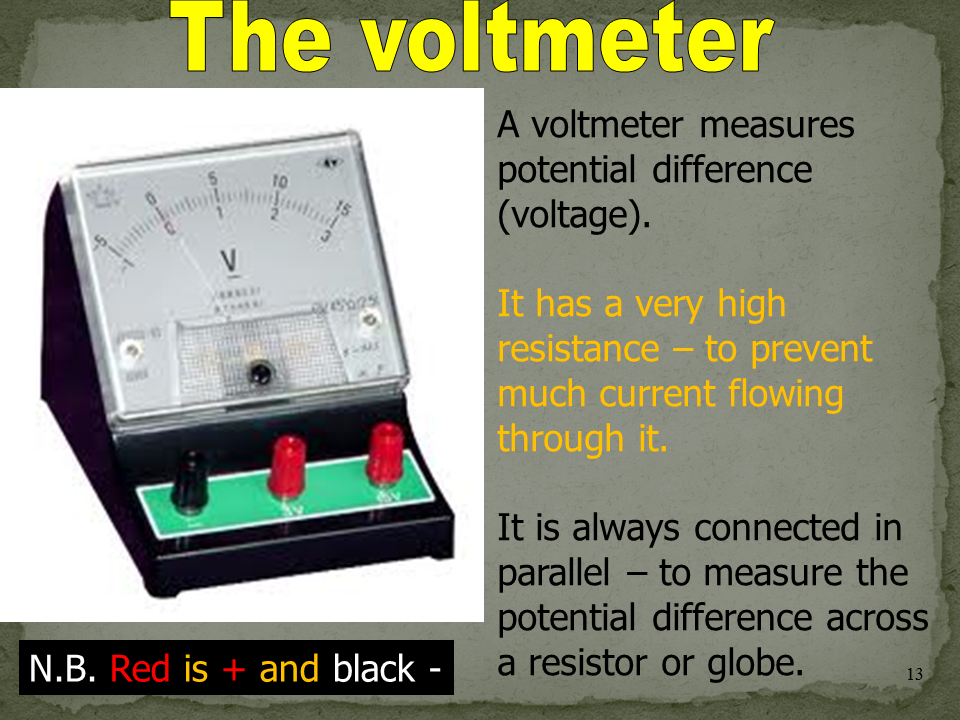
- Potential Difference: The voltmeter measures the potential difference between two points in a circuit.
- Connecting a Voltmeter: Must be connected in parallel with the component whose voltage you want to measure.
Possible Wiring Plan
- To measure current through a resistor, place the ammeter in series with the resistor.
- To measure the voltage across the resistor, place the voltmeter in parallel with the resistor.
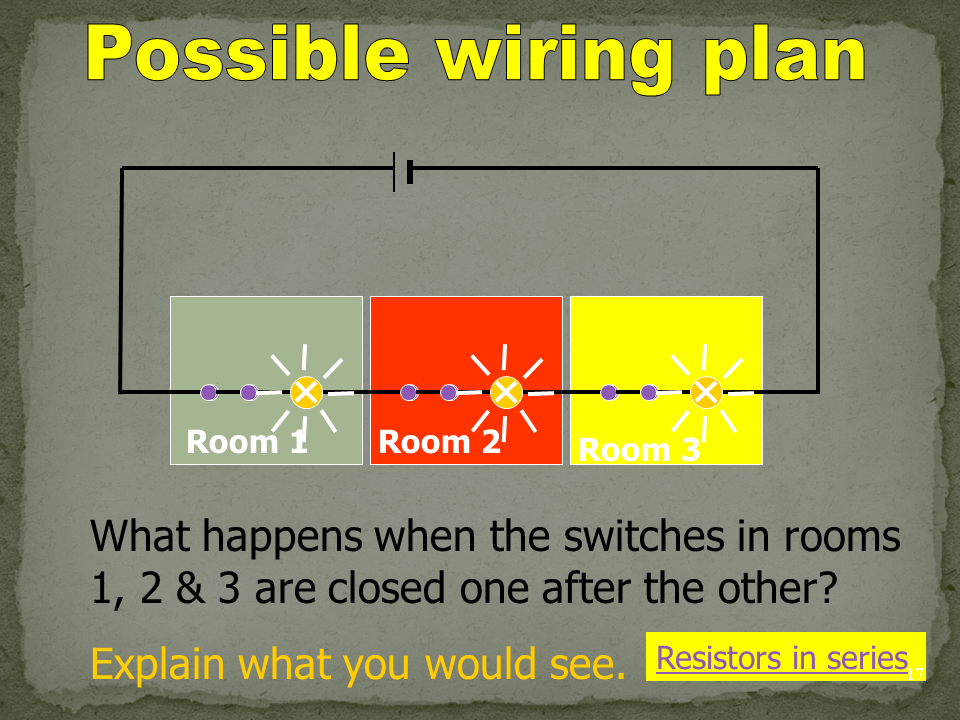
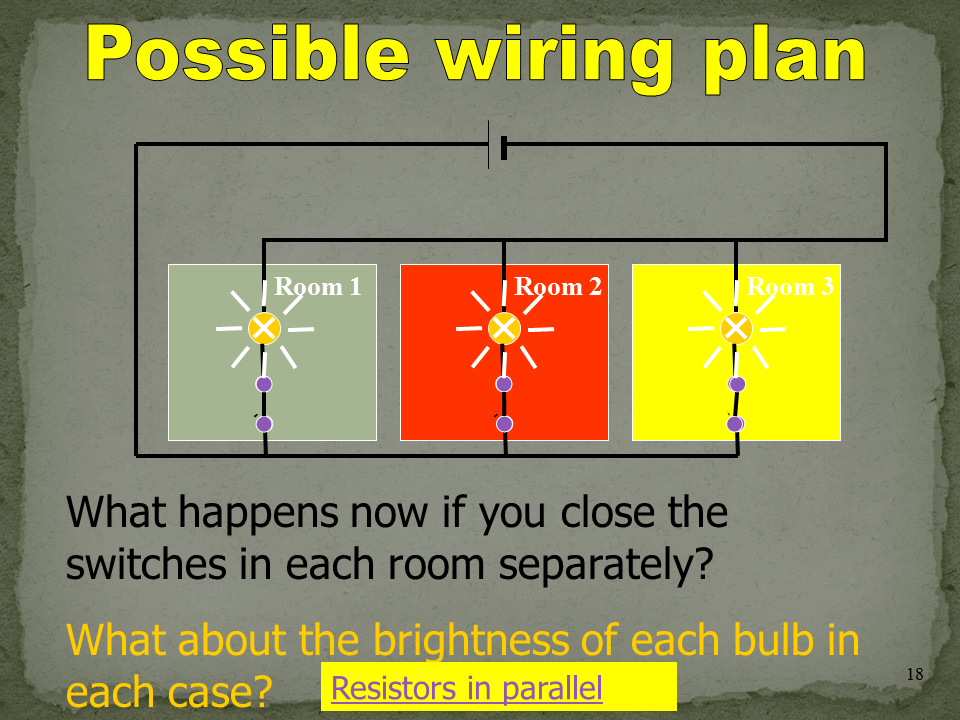
Resistors in Series and Parallel
- Series:
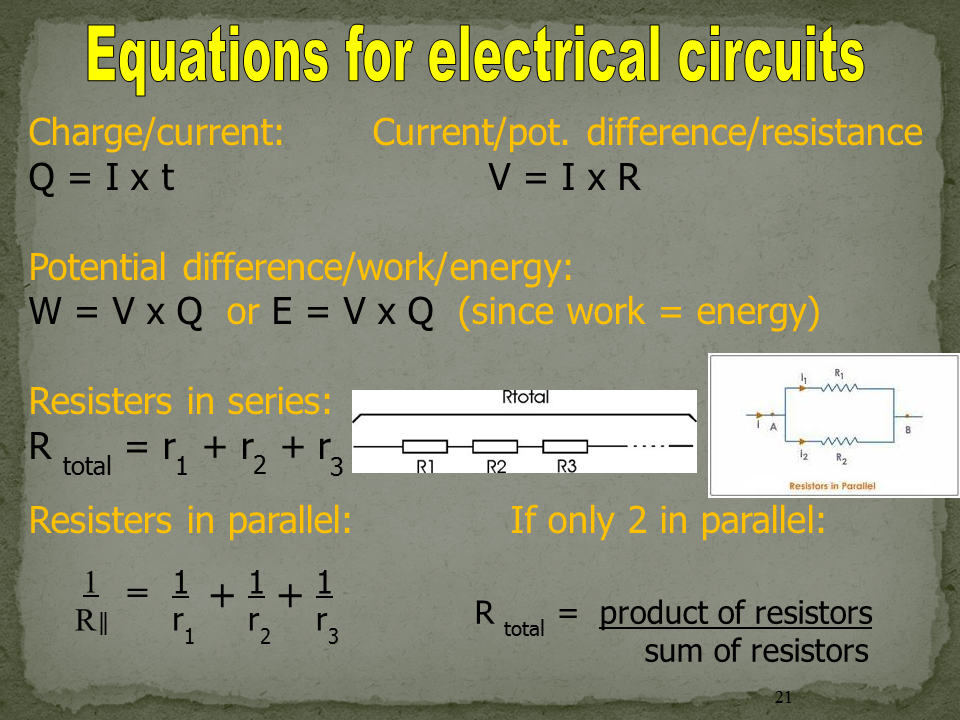
- Total resistance, ( R_{total} ): ( R_1 + R_2 + R_3 …
- Current through each resistor is the same.
- Voltage across each resistor is different.
- Parallel:
- Total resistance, ( \frac{1}{R_{total}} ): ( \frac{1}{R_1} + \frac{1}{R_2} + \frac{1}{R_3} + \ldots )
- Voltage across each resistor is the same.
- Current through each resistor is different.
Equation of Electric Circuits
- Ohm’s Law: ( V = IR )
- ( V ): Voltage (Volts)
- ( I ): Current (Amperes)
- ( R ): Resistance (Ohms)
- Kirchhoff’s Laws:
- Kirchhoff’s Current Law (KCL): The sum of currents entering a junction equals the sum of currents leaving the junction.
- Kirchhoff’s Voltage Law (KVL): The sum of all voltages around a closed loop equals zero.
Practical Example
For a circuit with a battery, a resistor, an ammeter, and a voltmeter:
- Ammeter: Connect in series with the resistor to measure the current.
- Voltmeter: Connect in parallel with the resistor to measure the voltage drop across it.
Diagram of Simple Circuit
  +----(A)----R-----
  |                |
  |                V
 (+)              (-)
Battery           |
  |                |
  ------------------
In this diagram:
- A represents the ammeter connected in series.
- R is the resistor.
- V represents the voltmeter connected in parallel.
- Battery provides the EMF.
This is a basic overview of the concepts and components in a simple electric circuit. If you need more detailed explanations or have specific questions, feel free to ask!



 Physical Sciences Break 1.0